How much do home insurance leads cost in 2026?
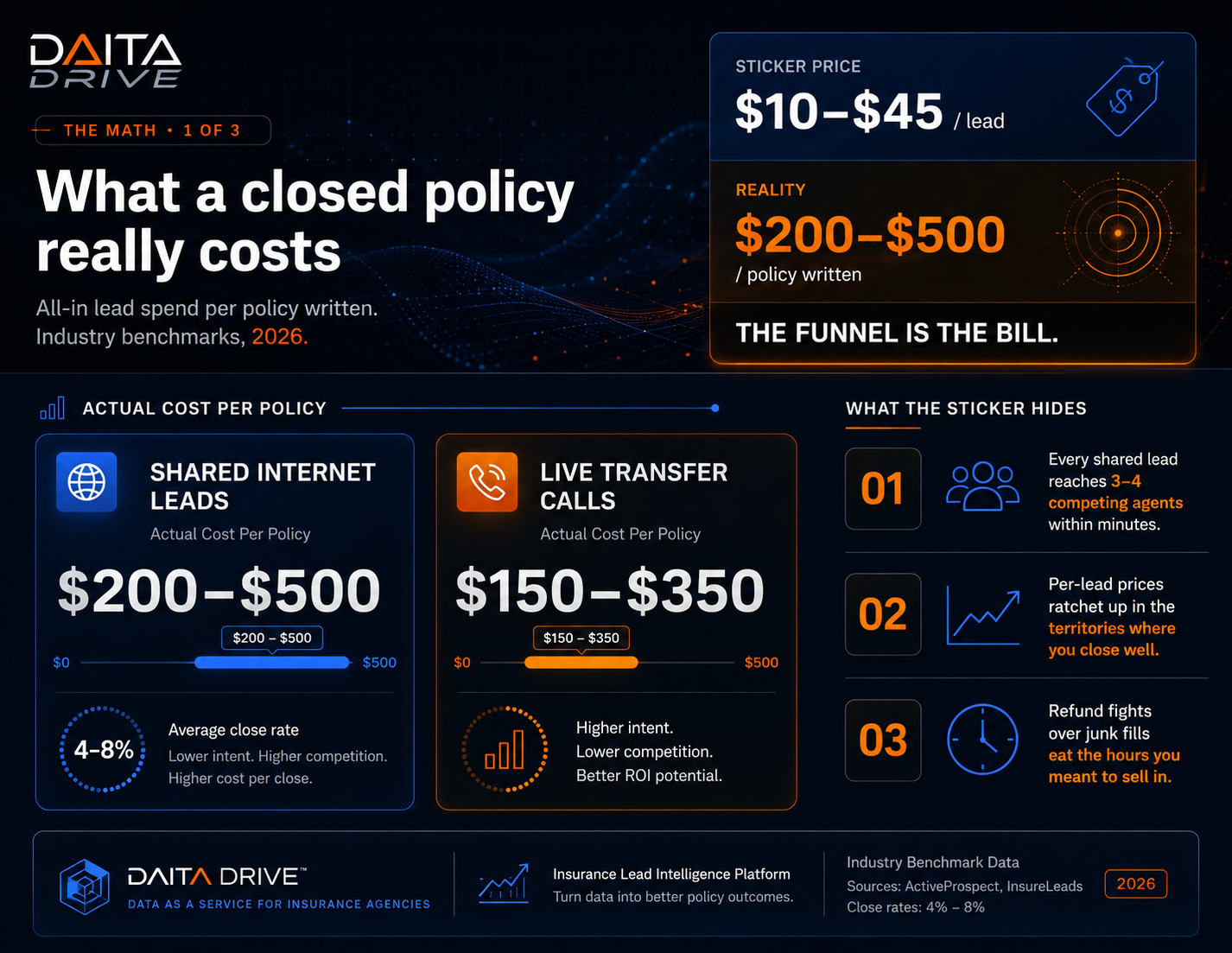
Published market ranges: shared home leads run $10–$45 each, exclusive web leads $18–$75, live transfers $45–$100 or more per connected call, and aged leads from under a dollar to $10 depending on age. Those are sticker prices. None of them is the real cost, because the real cost depends on how many turn into policies.
Why do shared leads cost so much per policy?
Because you’re splitting every prospect with 3–4 competitors. Shared leads close at 4–8% industry-wide; a $20 lead closing at 5% is $400 per policy before your time. Add the hidden costs: consumers hostile from repeated calls, per-lead prices that ratchet up in successful territories, and refund fights over junk fills. The unit price is the bait; the funnel is the bill. That’s why shared leads cost more per policy.
What changes when the lead is exclusive and scored?
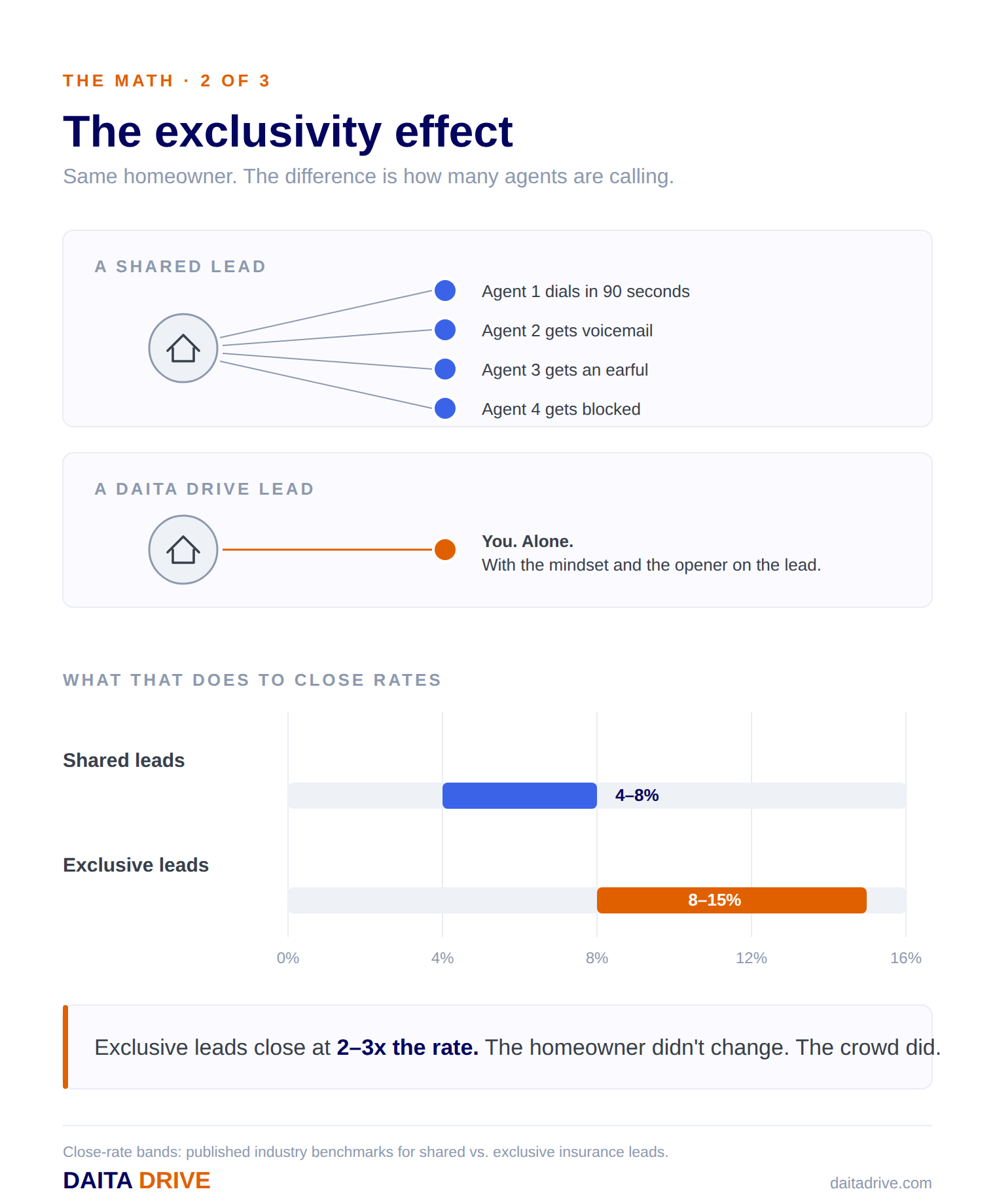
Two levers move at once. Exclusivity lifts close rates into the 8–15% benchmark band because nobody else is calling. Scoring concentrates your dialing time on homeowners predicted to shop soon, with an opener matched to what they care about. Same phone, same hours, different denominator. That’s the premise behind exclusive scored leads.
Run your own funnel
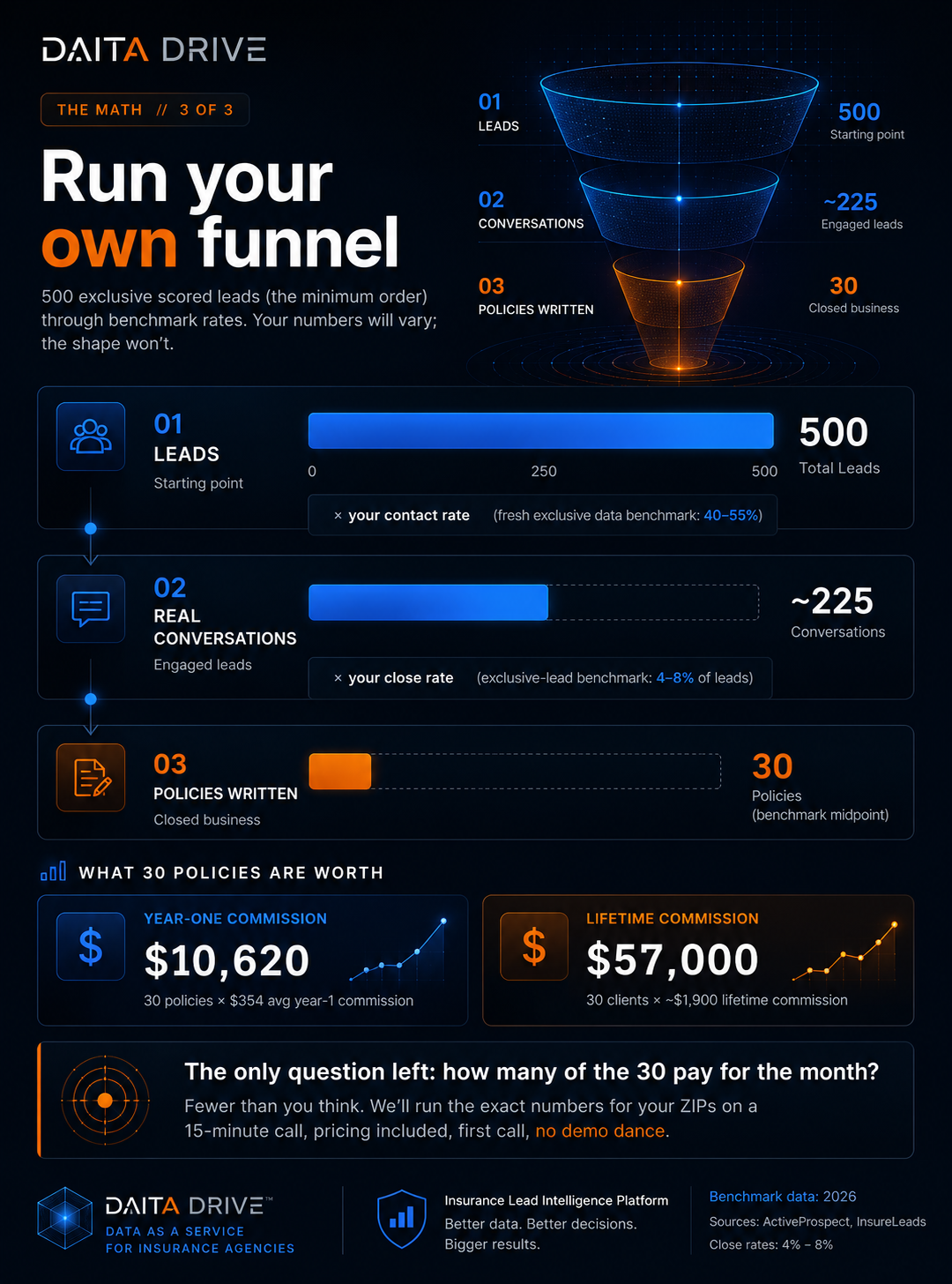
Take any batch of 500 leads (our minimum order). Apply your contact rate, your quote rate, your close rate. Divide spend by policies. Then multiply each policy by what a homeowners client is actually worth: roughly $354 in year-one commission and about $1,900 over the client’s life at national averages, more in high-premium states like Texas and Colorado. Most agents who do this once never go back to pricing leads by the each.
Want it on your numbers right now? Try the Lead Cost Calculator.
What does DAITA DRIVE cost?
Plans are simple monthly subscriptions sized to your territory and volume, with no contracts and free replacement of bad records. We give exact numbers for your ZIPs on the first call, on purpose: territory caps mean pricing depends on what’s actually open where you sell. Fifteen minutes, real numbers, no demo dance.